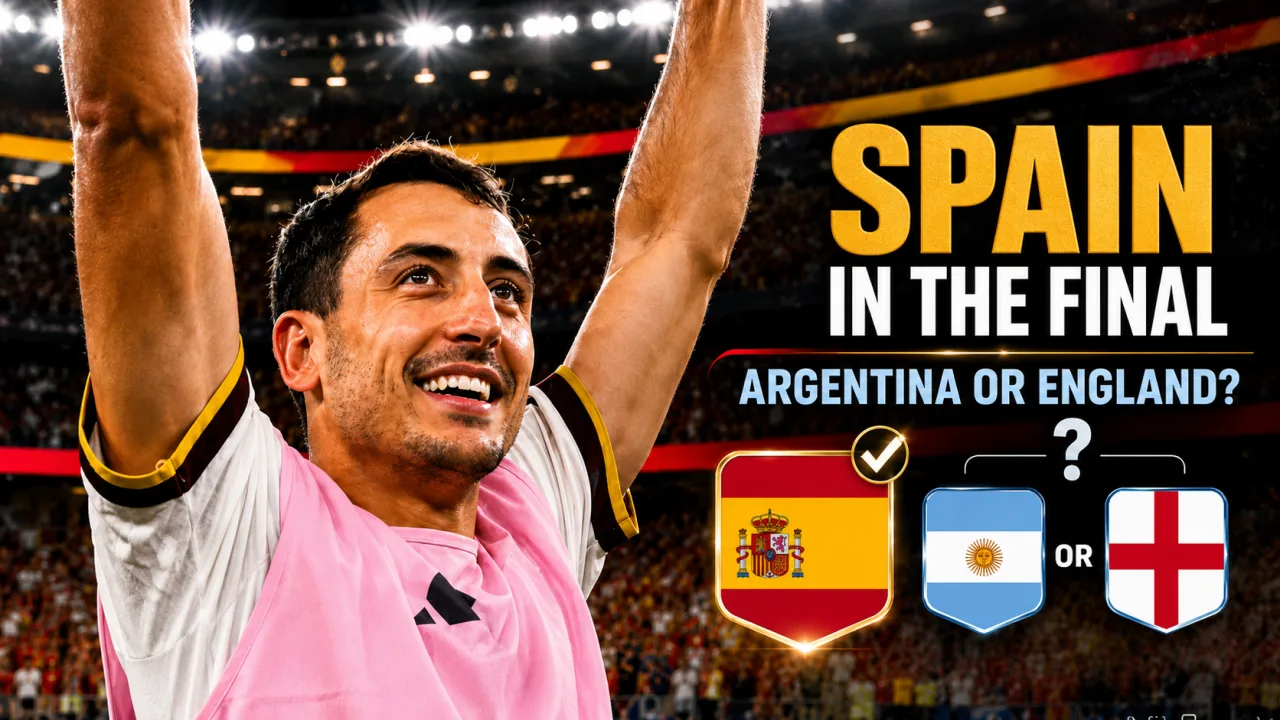
Spain reach the final with control and confidence
Spain have taken the first place in the 2026 FIFA World Cup final after a composed and convincing 2-0 semi-final win over France. In a match shaped by midfield discipline, tactical balance and sharp decision-making, Spain found the right moments to punish a French side that never fully settled into the rhythm of the contest.
Pedro Porro and Mikel Oyarzabal scored the decisive goals, but the story of the night was Spain’s collective control. Rodri and Fabian Ruiz helped dictate the tempo, while the team’s structure made it difficult for France to build sustained pressure. Spain did not simply defend a lead; they managed the game with maturity, keeping possession when needed and closing spaces before France could create clear momentum.
For France, the defeat will bring difficult questions. Didier Deschamps’ side had enough individual quality to trouble any opponent, but the semi-final exposed a lack of attacking fluency and in-game adjustment. French media reaction has already focused on the team’s inability to respond after falling behind, and the result is likely to increase scrutiny around the future direction of the national team.
England and Argentina carry history into Atlanta
The second semi-final now shifts attention to Atlanta, where England face Argentina in one of international football’s most emotional rivalries. Both nations arrive with strong tournament narratives, but also with pressure that goes far beyond the 90 minutes. England are chasing another chance to end their long wait for a World Cup title, while Argentina are trying to extend their era of major-tournament success.
England manager Thomas Tuchel has several selection decisions to make, especially in midfield, where balance and creativity will be crucial. England have shown resilience during the tournament, but against Argentina they will need more than defensive organisation. They must find a way to move the ball quickly through pressure and give their forwards the service required in tight spaces.
Argentina, meanwhile, remain dangerous because of their ability to change the emotional temperature of a match. Their attacking record and experience in knockout football make them a difficult opponent, and England will have to manage both the tactical battle and the atmosphere around a fixture loaded with history.
European club football continues in the background
While the World Cup dominates global attention, the European club season is also beginning to take shape. UEFA’s July calendar includes Champions League first qualifying round second legs on 14 and 15 July, with Europa League and Conference League qualifiers following in the same week. For smaller clubs across Europe, these early rounds are not background noise; they are the start of a season-defining campaign.
The contrast is striking: on one stage, Spain wait for a World Cup final opponent; on another, clubs are fighting for access to Europe’s league phases. Together, they underline the same truth about football in mid-July: the biggest prizes may be decided in stadiums full of global attention, but ambition is also being built quietly in qualifying ties across the continent.



Comments
Log in to comment.